Someone clicks an ad promising same-day boiler repair and lands on a homepage about the company's 30-year history. They hesitate, scroll, and leave. The ad did its job; the page didn't continue it.
Message match means the landing page picks up exactly where the ad left off. It's one of the simplest and most reliable conversion improvements available.
Repeat the promise
The headline should echo the ad. Visitors decide in seconds whether they're in the right place, and familiar words reassure them they are.
Match the visuals too
If the ad showed a particular product, person or setting, show it again near the top of the page. Visual continuity is as reassuring as matching words.

Build pages by intent, not by channel
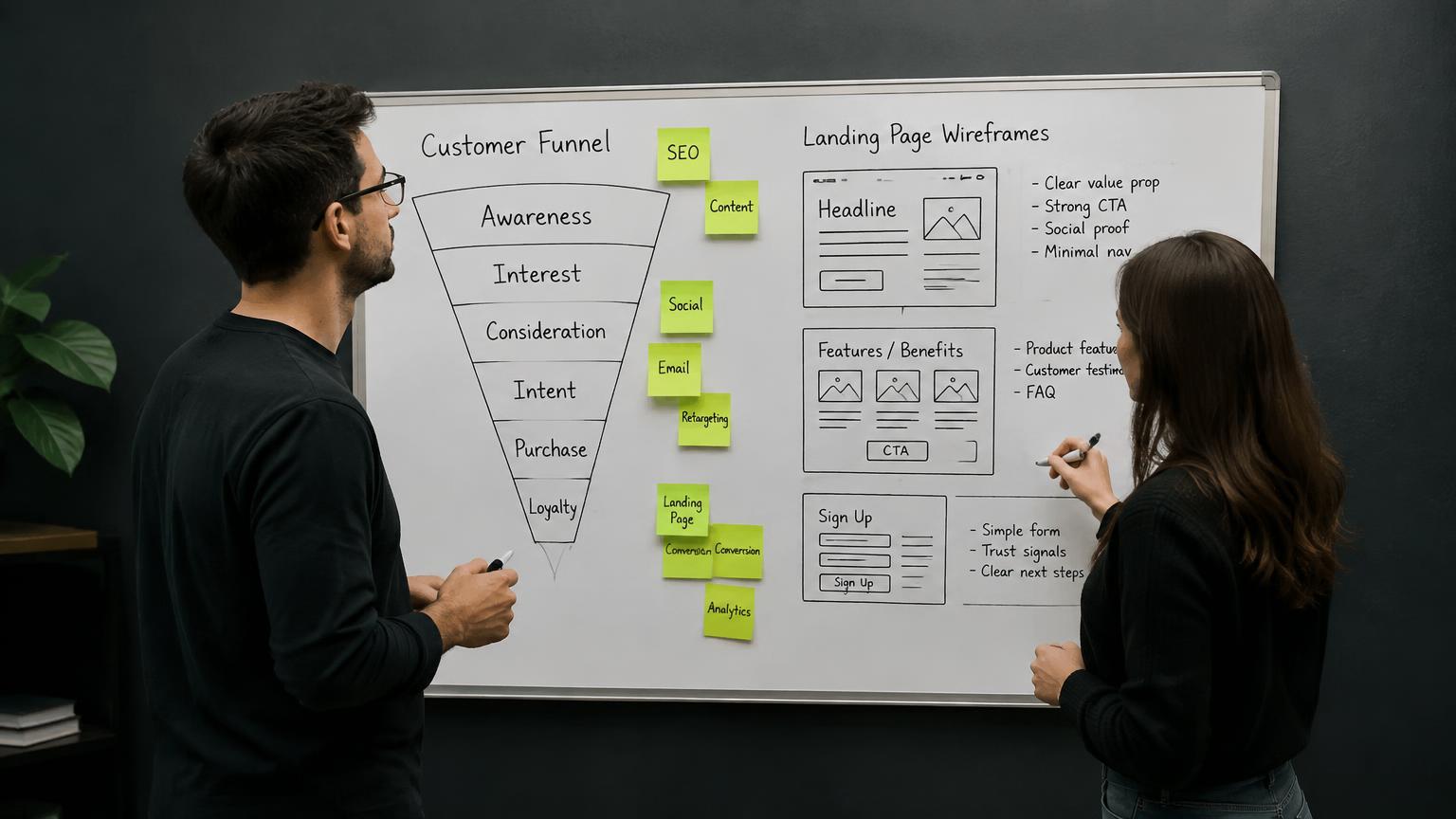
Different ads speak to different needs. An emergency search and a planned renovation search shouldn't land on the same page. Grouping ads by intent and giving each group its own page usually beats one generic landing page.
- Urgent need: speed, availability, phone number first
- Researching: explanation, comparison, proof
- Price-sensitive: clear pricing or ranges, financing
- Local: area served, local reviews, map
Check it on a phone
Most paid traffic arrives on mobile. Look at the first screen of your landing page on a phone: is the promise, the proof and the next step visible without scrolling?
Key takeaways
- →Echo the ad's headline on the landing page
- →Repeat key visuals for continuity
- →Create pages by intent group
- →Review the first mobile screen critically
Common questions
How many landing pages do we need?+
Start with one per major service or intent group. You can add more as you learn which ads drive the most value.
Should the landing page have navigation?+
Minimal navigation usually helps conversion, but keep a way back to the main site for people who want more context.
Can we use the homepage as a landing page?+
It can work for brand searches, but focused pages generally perform better for specific services.