A good landing page is a conversation. It answers the visitor's questions in the order they think of them, removes doubts one by one, and makes the next step easy.
Here's the structure we start from for most service businesses, section by section.
The first screen
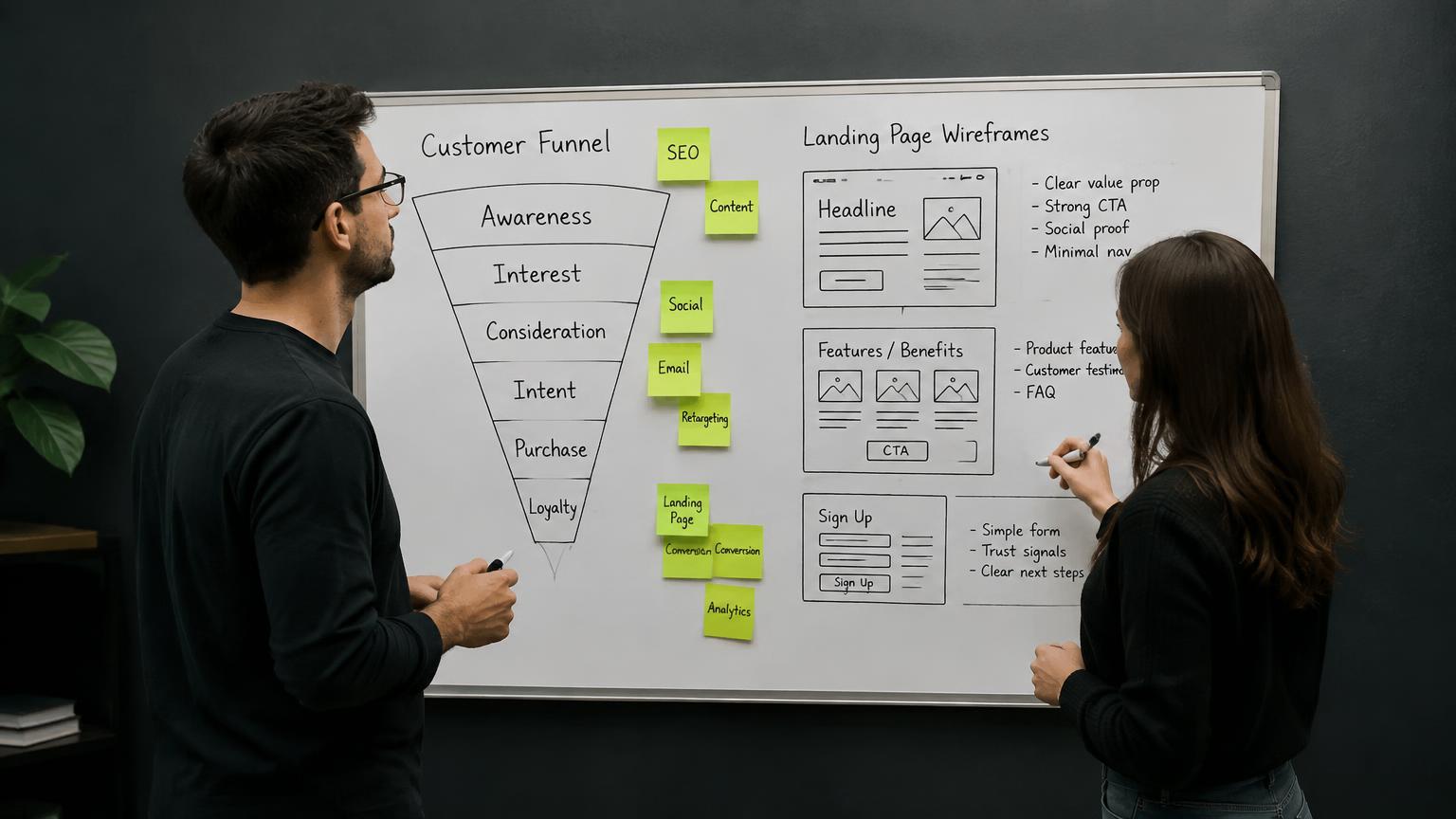
A headline that matches the ad, a single sentence explaining the outcome, and one clear call to action. Add a quick trust signal: rating, years in business or a recognisable client type.
Proof
Reviews, before-and-after photos, short case studies and accreditations. Specific, verifiable proof beats generic claims like 'industry-leading'.
How it works
Three or four simple steps from enquiry to result. It reduces uncertainty, especially for people who haven't bought this kind of service before.

What's included and who it's for
Spell out what customers get, and be honest about who it suits. Saying who it isn't for builds credibility and filters out poor fits.
Objections and FAQs
Answer the questions that stop people enquiring: price, timing, contracts, guarantees, what happens if something goes wrong.
- How much does it cost, or what affects price?
- How soon can you start?
- Am I locked into anything?
- What if I'm not happy?
The final call to action
Repeat the offer and make the form or booking simple. Tell people exactly what happens after they submit and how quickly you'll respond.
Key takeaways
- →Match the ad and state the outcome on the first screen
- →Use specific, verifiable proof
- →Explain the process and who it's for
- →Answer objections before the final call to action
Common questions
Long or short landing pages?+
It depends on the decision. Low-cost, urgent services suit short pages; considered purchases need more detail.
Should we include prices?+
Showing prices or ranges often improves lead quality, even if it reduces volume slightly.
How do we know what to improve?+
Use heatmaps and session recordings alongside conversion data, then test one change at a time.