
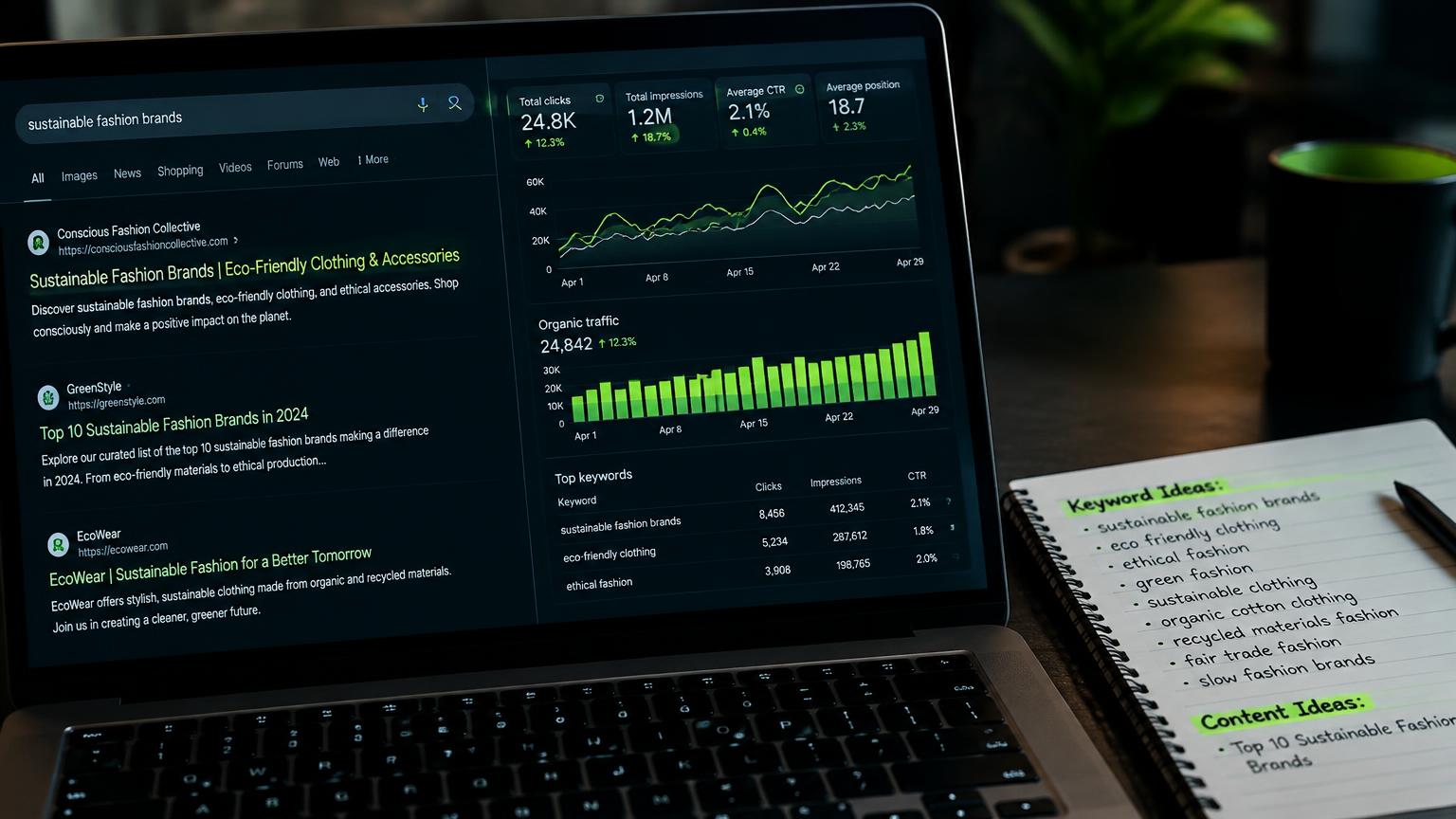
A client asked us a blunt question last month: "We rank third for our main service. Why are the phone calls slowing down?" We typed the same query into ChatGPT and Google. Both gave a neat summary answer, named two competitors, and never mentioned them. Their ranking hadn't moved. The page people actually read had.
That's the shift generative engine optimization (GEO) is about. It isn't a replacement for SEO, and anyone selling it as magic is overselling. It's the work of making your business easy for AI tools to understand, trust and quote. Most of it is good SEO done more carefully.
What actually changed
For twenty years, search meant a list of links. You competed for a position and hoped the title was tempting enough to earn the click. Now a growing share of searches end with an answer written by the engine itself, pulled together from several sources.
That changes the goal. Being on page one still matters, because AI answers lean heavily on pages that already rank. But the prize is being one of the sources the answer cites, or one of the businesses it names when someone asks for a recommendation.
How AI tools decide who to mention
Nobody outside these companies knows the exact rules, and they change often. What we can see from testing is that the brands that get mentioned tend to share a few traits.
- They explain things clearly, in plain language, near the top of the page
- Their facts are consistent everywhere: website, Google Business Profile, directories, reviews
- Other sites talk about them: press mentions, Reddit threads, industry roundups, YouTube
- Their pages are technically easy to read: fast, crawlable, with clean structure and schema
Write answers, not essays
Look at your top service page and ask: if someone asked one direct question about this service, could a machine find a clear two-sentence answer? On most sites the answer is buried under a paragraph about "passion" and "tailored solutions".
Start key sections with the answer, then add the detail. Use real numbers where you have them: price ranges, timelines, service areas, what's included. Specific, checkable statements are much easier to quote than vague claims.

Make your business facts impossible to misread
AI tools stitch together information from many places. If your website says you serve five states, your Google profile says one city and an old directory lists a phone number from 2019, you look less reliable than a competitor whose details match everywhere.
Do a simple audit. Search your business name, open the first twenty results, and fix every inconsistency you can. Then add Organization, LocalBusiness and FAQ structured data so the core facts are stated in a format machines read easily.
Earn mentions beyond your own website
Your own site can only say so much about you. AI answers lean on what others say: customer reviews, local news, industry publications, community discussions and comparison articles.
This is slow work, and that's the point. Answering questions in relevant forums, getting quoted by trade publications, collecting detailed reviews and publishing original data all build the outside evidence that you're worth recommending.
Measure it honestly
Measurement here is still messy. Most analytics tools can't tell you how often you appear inside an AI answer. Start with what you can track: referral traffic from AI tools in Google Analytics, branded search volume, and a monthly manual check of your key questions in ChatGPT, Gemini, Perplexity and Google.
Keep a simple spreadsheet: question, tool, whether you were mentioned, who was. After three months you'll see a pattern worth more than any vendor's dashboard.
Key takeaways
- →Classic SEO is still the foundation for AI visibility
- →Lead important sections with a clear, direct answer
- →Keep business details identical everywhere online
- →Build mentions on sites you don't own
- →Track AI referrals and test key questions monthly
Common questions
Is GEO different from SEO?+
It's an extension of it. Strong rankings, clear content and good technical health still do most of the work; GEO adds a focus on being quoted and mentioned in AI answers.
Can anyone guarantee my business appears in ChatGPT?+
No. AI answers vary from one question to the next and change over time. Anyone promising guaranteed placement is guessing.
How long does it take to see results?+
Technical and content fixes can show up within weeks; building outside mentions and reputation usually takes several months.